
Great Hope Stormwater Pond Restoration
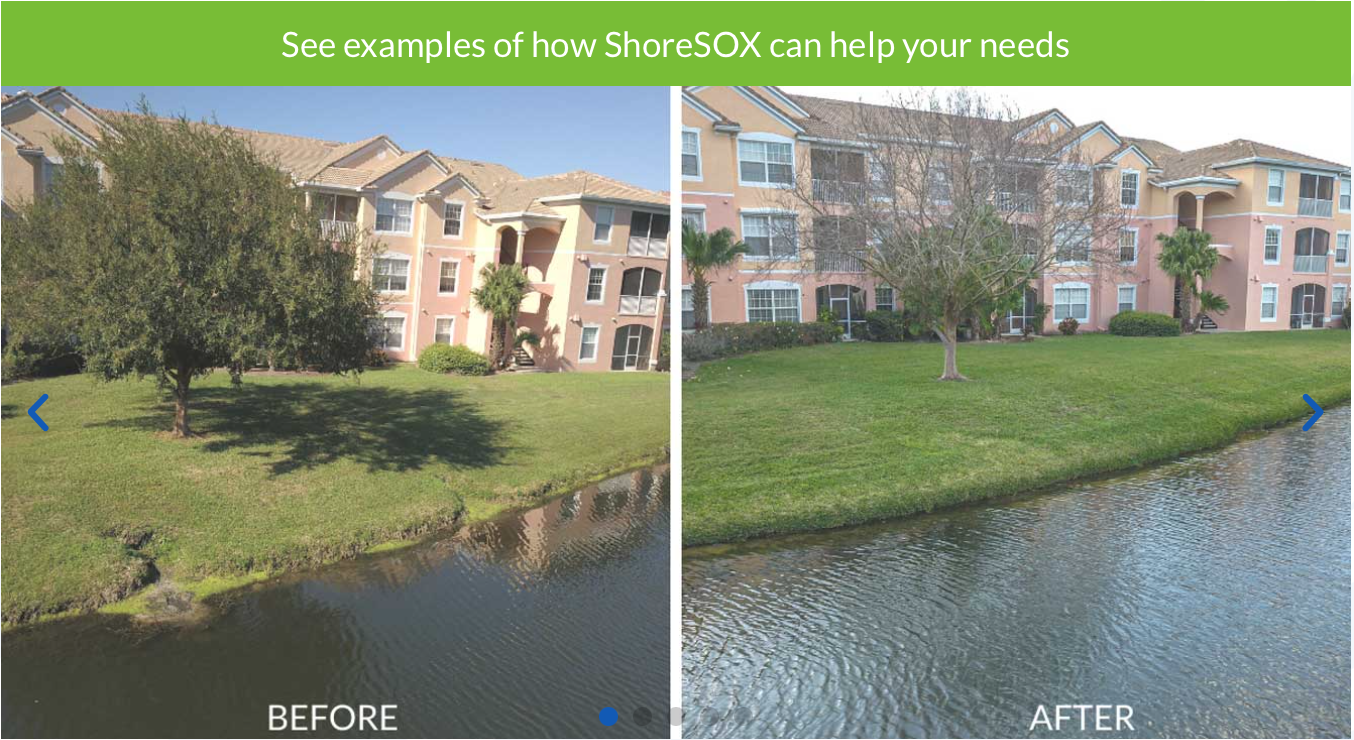
About This Project: This webpage povides ongoing updates and details about the shoreline restoration of the larger Great Hope Pond at Isles of Rivertowne.
What Are We Doing?
Estate Management Solutions (EMS) is installing ShoreSOX, a patented erosion-control system designed to restore pond edges. According to a recent University of Michigan study, ShoreSOX installations have a proven lifespan of at least 30 years. Because the technology is relatively new (developed about 30 years ago), its durability may be even longer.
Why Is This Project Necessary?
-
To restore severely eroded pond edges.
-
To remove sediment from the pond and use it as fill within the ShoreSOX.
-
To create a stronger, more stable shoreline resistant to further erosion.
-
To improve the pond’s appearance and overall community aesthetic.
Who Is Completing the Work?
EMS (Estate Management Solutions) is handling the installation, contracted by the Isles of Rivertowne POA (the homeowners’ association responsible for maintaining community ponds).
Why are we not doing the whole pond?
We’re doing the most critical 80% of the pond where we run the greatest risk of large chunks of land dropping into the water, and the remaining 20% at a later time. Note that the most critical 80% is NOT the edges that look the worst.
Project Timeline:
Work is expected to complete around June 21st. Sod will be placed before that to help retain the shoreling and more sod added at the end. Then marsh grasses will be planted at the very edge. This could change if dredging is faster or slower than expected, or the additional geese eggs that were found on the site do not hatch. (Two have already hatched) Geese are an endangered species and we cannot move the nest, so the project cannot be completed until they are gone.
How Does the Restoration Process Work?
- Site Prep: Various workers will be in and out marking utilities and doing other site prep.
- Sediment Removal:
A hydraulic dredge will vacuum pond sediment. If sediment quantity or quality (clay content) is insufficient, additional fill material will be brought in. - Installing ShoreSOX:
ShoreSOX, similar to a durable fabric, is staked down along the shoreline. Pond sediment and/or fill material is placed inside, and then it is sealed, creating a stable, reinforced edge. Water can filter through, but soil stays securely contained. - Securing the Shoreline:
Once installed, ShoreSOX creates a firm edge strong enough to walk on or support landscaping equipment, such as lawnmowers. - Landscaping the Shoreline:
Sod will be planted on top of the ShoreSOX, extending nearly to the pond’s edge. We may also plant spartina, a natural marsh grass, at the shoreline to create an attractive, environmentally friendly boundary.
(Note: The example photo above only shows sod, but we may also plant spartina at the edge.) - Watering the sod and marsh grasses: We are using water from the fire hydrants as the pond water is too salty. we will be hooking up hoses on timers and watering may go 30-45 days.
Where is this located? 1831 Great Hope Drive, Mt. Pleasant 29466
Is This the Same Company and Product as the Demo Installation?
No. This project uses ShoreSOX technology and will be installed by Estate Management Services. After evaluating the demo, we chose a proven, patented solution instead.
Questions & Contact Info
-
Check this website regularly for the latest project updates: https://IslesPonds.com
-
For further questions, please contact our property manager:
Liz Thomas
Email: [email protected]
Phone: 843-768-9480 ext. 3909
Essential Facts About Stormwater Ponds
Stormwater ponds play a critical role in our communities. They’re carefully engineered according to strict local, state, and federal standards, designed specifically to manage flooding and maintain water quality—not simply for aesthetic purposes.
Did you know that everything running off your house, driveway, and yard flows directly into these ponds through yards and stormwater drains? That’s why it’s important to follow the Pond Do’s and Don’ts below:
Pond DO’s and Don’ts:
To help protect our community’s stormwater ponds, please follow these simple guidelines:
1. Do NOT Dump Yard Waste into Ponds
Grass clippings, leaves, and other organic materials increase sediment build-up, leading to more frequent dredging and higher maintenance costs.
2. Keep Storm Drains Clear
Never place yard waste or debris on storm drains. This material can clog drains, and vehicles used for removal can also damage them.
3. Limit Fertilizer & Chemicals
Avoid over-fertilizing lawns and gardens. Use hydrogen peroxide-based products rather than bleach when cleaning your house, driveway, or vehicles. Remember, whatever you use ends up in our ponds.
4. Preserve Shoreline Vegetation
Do not remove or cut plants and trees around pond edges. Always seek board approval before making any shoreline modifications.
5. Do NOT Feed Geese
Feeding geese encourages them to linger, causing significant harm. Geese consume beneficial shoreline plants, contribute to bank erosion, create bare spots, and negatively affect water quality.