The Appreciative Living (AL) Habit Breaker Technique: Change Habits by Changing Beliefs
There is a particular kind of exhaustion that comes from fighting yourself.
You tell yourself you won’t do it again.
You promise this time will be different.
You try to control it.
You resist it.
You beat yourself up over it.
And yet… it returns. Sugar, binging, doomscrolling, gaming, procrastinating, people-pleasing, worrying, staying up too late, checking the news again.
It can feel like an internal tug-of-war. And no matter how bad you want to stop, the urge eventually wins.
The Habit Breaker Technique was created for this moment. Rather than fighting the habit, it provides the tools to remove the internal fuel that keeps it alive.
The Core Insight: You Don’t Lack Discipline, You’re Brain is Confused
Within the Appreciative Living philosophy, behavior is never random. It follows from beliefs and patterns adopted throughout life to cope with experiences and traumas.
In other words, if you change your thinking, you change your beliefs, which then shifts your emotional state, behavior, identity, and ultimately your life experience. Thinking drives the bus.
When a behavior feels compulsive or resistant, it is being driven by underlying beliefs such as “this helps me feel safe, relaxed, relieved, or helps me cope or protects me.”
Beliefs like these cause your brain to repeat habits under the false pretense that these benefits serve you more than the costs they incur. The Habit Breaker Technique gets the brain to see this is not true, and once it does, it stops creating the physical urges and cravings. It feels like magic.
How can I experience the Habit Breaker Technique?
We just opened up a new discounted program where you can work with Jackie one-on-one to overcome your worst habit using this technique. Click the link below to learn more.
What Is the AL Habit Breaker Technique? A Coaching Tool for Stopping Bad Habits.
The Appreciative Living Habit Breaker Technique is a specific intervention designed to reduce compulsive habits, avoidant habits, emotionally driven behaviors, and resistance to positive change. It does this by altering the underlying belief patterns that drive urgency or avoidance.
It is a step-by-step coaching tool used to dismantle unwanted habits at the belief level. It is the flagship applied intervention within Step 2 of the overarching Rapid Change Process and sits within the Appreciative Living ecosystem as follows:
- Appreciative Living is the umbrella philosophy
- The Appreciative Mindset is the core thinking orientation
- The Rapid Change Process is the overarching transformation framework
- The Habit Breaker Technique is a core tool within Step 2 of the Rapid Change Process
It Is NOT Hypnosis, Therapy, or Willpower
The Habit Breaker Technique works on the subconscious level but it is not hypnosis, therapy, forced change, positive thinking denial, or “Just stop doing it.”
It does not rely on willpower, discipline or suppressing desire. It changes the subconscious beliefs driving the behavior which reduces the neurobiological mechanism causing the urge. This makes discipline minimal or even unnecessary.
It is a step-by-step coaching technique, where the coach asks questions and the client answers. It can also be done as a solitary exercise once the technique is understood, though not quite as effective as working with a coach.
What People Often Experience: Cravings Stop
When the technique works, people experience:
- No more cravings or urge to do the behavior.
- Increased sense of choice and presence
- Insights on the underlying causes of the behavior
- Feeling neutral around former triggers
The most common and surprising report is this: “I just don’t want to do it anymore.” This is what happens with belief-level change.
The Two Types of Habits It Addresses
The Habit Breaker Technique works with two kinds of habits:
1. Reward Habits
These are behaviors or thoughts you “seek” or feel pulled toward doing such as sugar binging, screen overuse, news obsession, worry spirals, over-controlling, over-spending, people pleasing, gaming, or staying up too late.
You feel compelled to act and your nervous system anticipates relief or reward by doing them. The drive is physical with your brain pumping out neurochemicals like dopamine and serotonin to get you to act.
2. Avoidant Habits
These are behaviors or thoughts you resist such as not exercising, procrastinating, avoiding conflict or difficult conversations, not starting meaningful projects, or putting off budgeting or organizing.
Avoidant habits feel threatening because your nervous system anticipates discomfort or failure in doing them. It pumps out a different set of neurochemicals like cortisol to make you avoid them rather than seek them.
In both cases, the behavior makes sense based on what your brain currently believes. There is nothing wrong with you or your brain. It just needs new information to do things differently.
The Appreciative Living Habit Continuum
After working with a variety of people with unwanted habits, it became helpful to distinguish the increasing intensity or severity of the habits people faced. Five different levels were identified and named, and the following chart depicts the subjective experience of each.

This chart has been helpful for people to get a sense of where they are with the habit at the start, and to see where they progress after using the Habit Breaker Technique. While not meant to be a diagnostic tool, it is also another way for coaches and other helping professionals to assess when a client might be bridging into a need for therapy or expert medical help.
The Reptile & The Cortex: A Brain Metaphor in The Habit Breaker
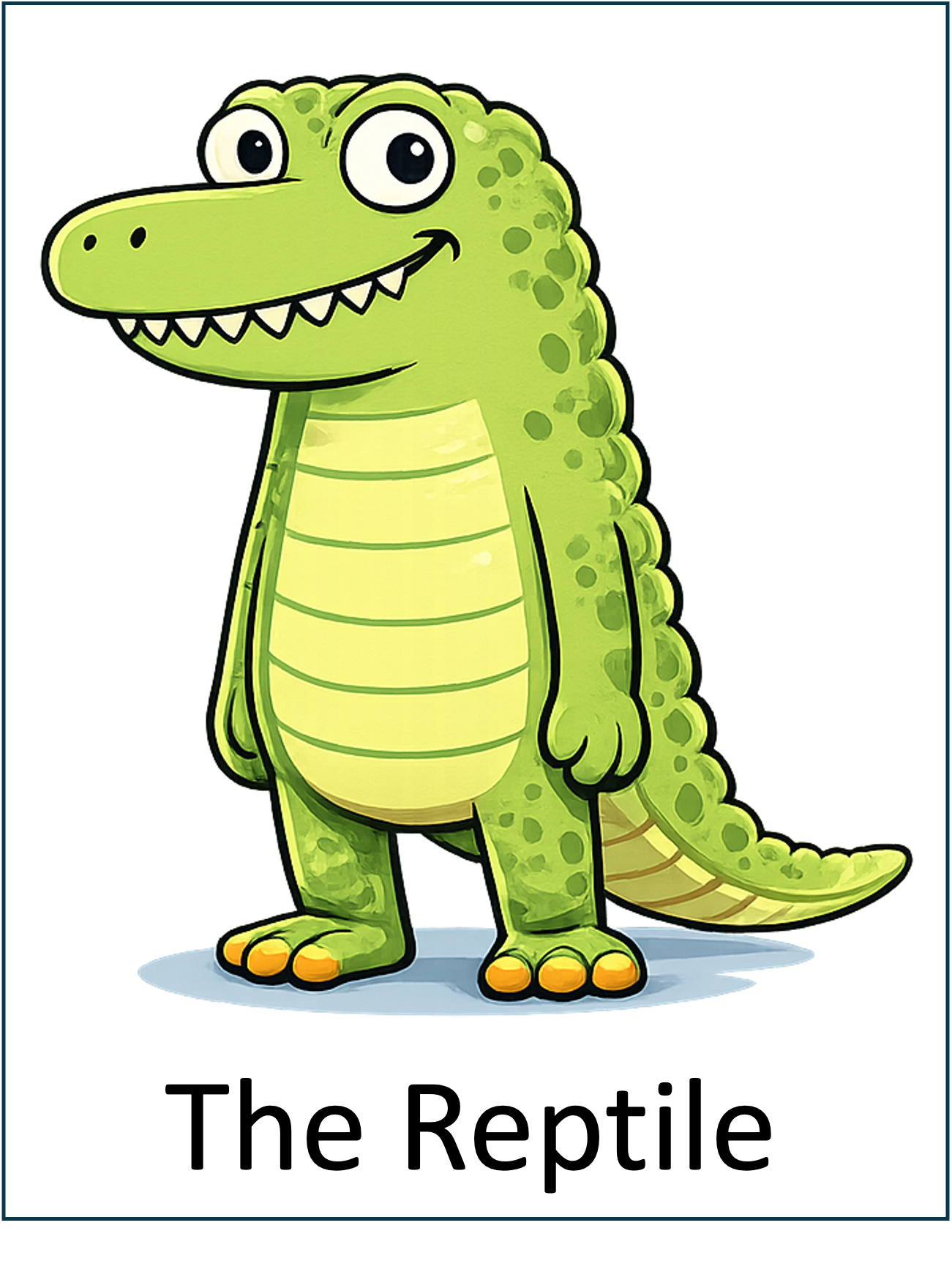
The brain is incredibly complex. In order to help people understand the role of the brain in the Habit Breaker Technique, we talk about it as two characters: The Reptile and the Cortex.
The Cortex is the thinking brain. It’s the part sometimes referred to as the conscious mind that analyzes, judges, makes decisions, and basically, well, thinks. It’s the one that wants you to stop eating sugar because it has analyzed it and decided it’s not good for you. It’s also the one that creates what we think of as discipline and willpower.
Then there is the Reptile, which is the older, more primitive part. It includes the emotional and subconscious part of your brain that operates on autopilot, and it holds your deepest fears, beliefs, and automatic behaviors. It takes care of things like breathing and heart rate, while also creating the urges that make you act on habits and compulsions.
The two brains don’t always agree, which is what happens when you want to change an unwanted habit. The Cortex “thinks” it’s bad and uses its tool of willpower to try and change, while the Reptile believes it’s serving you and uses cravings and feelings to keep you doing it. It feels like a war inside your head, because there is.
While both brains do important things, the Reptile runs the show. It is much stronger from an evolutionary standpoint, and the urges and emotional drive it creates will typically overpower discipline with time.
The Habit Breaker Technique is a way to sneak into Reptile thinking and get it to align with change the Cortex wants. Once the Reptile agrees with the Cortex that the behavior is not serving you, it stops producing the urges to do it and the bad habit stops. Sometimes instantly.

Why Willpower Fails & the Habit Breaker Technique Works
Discipline and willpower work at the behavior level which is downstream of thinking. Thinking drives behavior, so if you don’t change your thinking, you will be fighting an uphill battle all the way. This is why so many attempts at change fail.
If the subconscious Reptile believes things like, “sugar brings me comfort, scrolling helps me decompress, procrastination protects me from failure, worry keeps me prepared,” then it will continue to try and make you act on your compulsive habit.
Trying to override the Reptile with Cortex discipline is a tough road that few master. Those who do have likely shifted their underlying beliefs at some point, because the Reptile is the stronger brain from an evolutionary standpoint.
The way to avoid willpower and discipline is to use the Habit Breaker Technique to get your Reptile to see that the bad habit is actually not working for you.
Does it work for everyone? Yes so far, but data is limited.
It has worked for every person Jackie has coached after refining the process, and we’re genuinely encouraged by that. But we want to be honest about the limitations of this statement. She hasen’t worked with thousands of people yet, and the clients she’s worked with tend to be growth-oriented, self-reflecting people who have already done some inner work. We expect there will be people this won’t work with.
What Makes This Different? Everything. It’s the Complete Opposite of What We Typically Do
While the full process is taught in detail inside the Rapid Change Process, the mechanism for change includes four essential differences from mainstream approaches:
1. It Uses Appreciative Inquiry Instead of Problem Solving
The Cortex is naturally wired to address habit change from a problem-solving perspective. That means analyzing it, looking for the root causes, and forcing the Reptile to change. No one likes to be changed, especially when they were not allowed to input into the change, don’t agree with it, and are being forced.
So the Reptile digs in deeper to stand its ground. It can make the habit worse.
Using Appreciative Inquiry rather than problem solving is the complete opposite approach. It’s a Cortex questioning tool that invites the Reptile in and listens with rapt attention to what it thinks. Rather than ignoring the Reptile or viewing it as a problem to be fixed, it admires and values it as an intelligent, well-meaning part of the brain that is doing its best to serve you. It posits that every habit began as a solution that worked at one time.
Staying curious and open through Appreciative Inquiry allows the Reptile to feel safe and involved in exploring what it thinks rather than defending itself from being the problem.
2. It Changes Beliefs Rather Than Behavior.
When people want to stop a bad habit like nail biting, the first place they typically start is deciding what to DO. How will I stop this? Should I get some of that bad tasting stuff to put on my fingers? What do the experts say I should do? What else could I do instead of biting my nails? Who should I talk to?
This is backwards. As mentioned above, thinking and beliefs drive behavior. The place to begin is what the Reptile is thinking, not what you’re doing.
How does your Reptile believe nail biting is serving you? Does it reduce your anxiety? Make you feel safe?
Upon further inspection with the Habit Breaker Technique you’ll come to see the behavior is not serving you, and in fact, it creates the very problems you think it solves.
3. It Works with Feelings to Get to Thoughts
Most change efforts are Cortex-based. In other words, they use problem solving, analyzing, goal setting, and other analytical tools to try and change behavior. But the Reptile is a feeling brain that responds to emotional cues. In order to reach the Reptile and “speak its language,” the focus is on the feeling experience of the behavior. Feelings flow from beliefs, and this is the fastest way in to understanding the Reptile thinking and how best to work with it.
4. It Unravels Limiting Beliefs Rather Than Trying to Forcibly Change Them.
Discipline and willpower are basically your Cortex trying to force your Reptile to stop doing something it doesn’t want to. Over time, the hope is that the Reptile will soften and it will get easier. This can happen but it takes a long time and is not usually successful.
Instead of forcing the Reptile to change its beliefs, the Habit Breaker Technique helps the Reptile come to the conclusion itself that it needs to change. There is no forcing or cajoling. The Cortex patiently asks more and more appreciative questions until it becomes plainly obvious to the Reptile this isn’t working. The belief basically unravels.
5. It Addresses Underlying Causes Rather Than Treating the Symptoms
Many habit change best practices focus on tracking behavior, removing triggers, increasing friction, modifying the environment, adding accountability, and creating reward systems. These can work, but you’re constantly fighting the urges and cravings of the Reptile.
The Habit Breaker Technique shifts the underlying drivers so these types of actions are much easier to do because there is little to no resistance from the Reptile. And they are not even needed in some cases. They are still relevant when trying to build a new positive habit, but not always required when stopping an unwanted behavior with the Habit Breaker Technique.
How Long Does the Change Last? It Depends
The Habit Breaker technique stops the cravings and behavior. What it doesn’t always do, is address the underlying drivers of the habit such as feeling lonely, bored or unsafe. If that root is not addressed the habit can come back over time, or a new habit can get created to replace it. Stopping the behavior is real progress but it isn’t always the whole story.
In our small one-year pilot study, all the people who finished the pilot had stopped their habit and it had not come back within the year. They had also done some work to address the underlying drivers.
The shortest time it lasted for all the people Jackie worked with was a person who quit smoking. They stopped for three months but then started up again. She only did one session with him and never worked with him beyond that.
Who It’s For
The Habit Breaker Technique is for reflective, growth-oriented adults who:
- Have tried to break habits before without success
- Want sustainable change rather than forced suppression
- Are willing to examine their thinking honestly
It is especially helpful for:
- Sugar binging and cravings
- Screen and phone overuse
- News overwhelm and doomscrolling
- Overspending or fear of spending
- Compulsive gaming
- Procrastination
- People pleasing or dominating
- Avoidance patterns
- Resisting good habits
Interested in Getting Coached by Jackie with the Habit Breaker Technique?
Click below to learn about a brand new program where you can be coached by Jackie to stop your unwanted habit!
Frequently Asked Questions
How fast does it work? 1-3 Sessions on Average, but data is limited.
The typical time for a habit to break is 1-3 sessions, but our data is limited as this technique is relatively new. It has not been tested on large numbers of people, and the population we’ve worked with tends to be growth-oriented, self-reflecting people who hae already done some inner work.
Do I still need to take action after the habit stops?
Yes, may still need to address the underlying drivers, but it’s much easier to do this when the urges are gone. This is where the Rapid Change Process comes in which does require you to take action.
Is it safe for serious addiction?
Those with severe addiction or withdrawal risk should seek qualified professional support instead of using this technique. The Habit Breaker Technique is not a substitute for medical advice or clinical care and is not meant to treat, diagnose, or cure any medical condition.
Where can I go to learn more?
To learn more about the underlying philosphy and supporting frameworks see the following:
- What Is Appreciative Living? to understand the overall philosophy.
- The Appreciative Mindset to understand the core thinking orientation.
- The 4-Step Rapid Change Process to learn the full transformation model for how to address the underlying causes driving the unwanted habit. (this page is coming soon!)
To Get Habit Breaker Coaching click the following link: